Austin Kleon
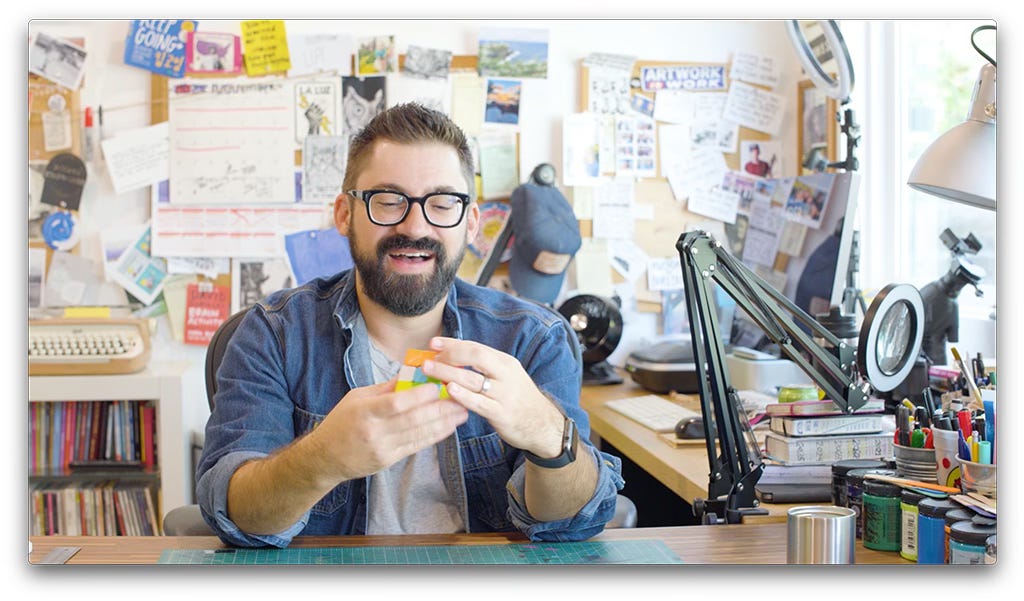
Author of Steal Like an Artist, blogging generous, practical essays on creativity and the writing life.
Author of Steal Like an Artist, blogging generous, practical essays on creativity and the writing life.
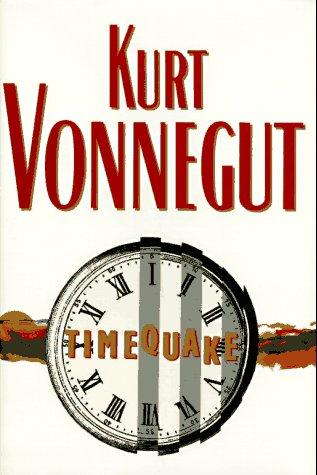
Austin Kleon identifies this as a core influence, rereading it for inspiration as part of his 'Holy Trinity'.
Austin Kleon cites this as a foundational text within his personal 'Holy Trinity' of influential literature.
Austin Kleon lists this as one of his 'Holy Trinity' of essential writers/works that influence his creative life.
Austin Kleon values it as a source of inspiration for drawing maps and analyzing books.
Austin Kleon values this text for its insightful connections to his own thoughts on narrative structure and comedy.
Austin Kleon recommends this work as a great resource for understanding the relationship between neurological function and drawing.
Austin Kleon values this book as a source for his current exploration of left and right brain hemisphere differences.
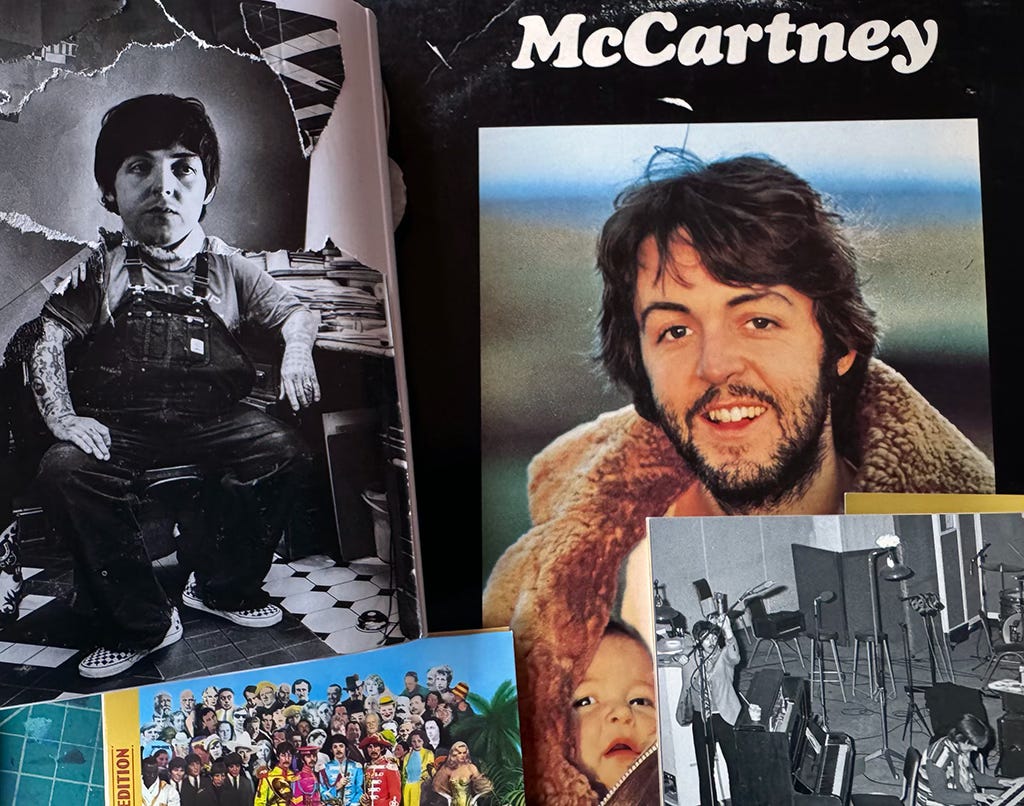
Austin Kleon values this book for explaining McCartney's intuitive approach to music and his fear of overanalyzing his craft.
“After sixty years of interviews, it’s clear that McCartney does not understand why music comes so naturally to him, or flows out of him so easily, in a way that doesn’t happen to other people.”
Austin Kleon utilizes this book to illustrate the specific, intimate nature of the songwriting relationship between Lennon and McCartney.
“One late November afternoon in 1962, John Lennon and Paul McCartney got together to write at Paul’s house at 20 Forthlin Road in Liverpool.”
Austin Kleon values the scholarly context provided by this book, noting that Michael Sims wrote a lovely foreword for a related collection he is currently reading.
Austin Kleon cites this book to share a powerful quote about the purpose of art and artists.
“I say in speeches that a plausible mission of artists is to make people appreciate being alive at least a little bit.”
Austin Kleon recommends this book for its insight into observing local landscapes and encourages readers to track the subtle changes in their environment.
Austin Kleon values this book for its gorgeous quality and artistic merit, prompting him to recommend it to his readers.
Austin Kleon lists this as one of his all-time favorite books and highlights the new free version released by Standard Ebooks.
Austin Kleon identifies this as his favorite book on the intersection of art-making and child-raising.
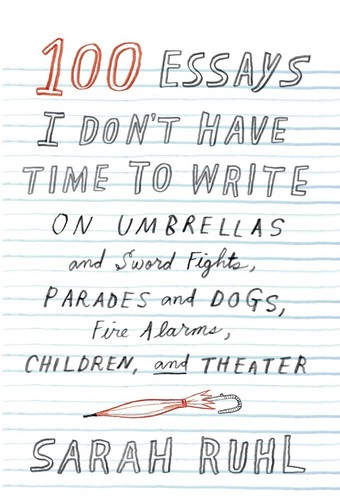
“In the theater, we ask adults to be children again, to sit in a circle and be read to.”
Austin Kleon values this work for articulating the philosophy of acting as a co-learner rather than a boss to children.
“It is not so much a matter of technique as of spirit.”
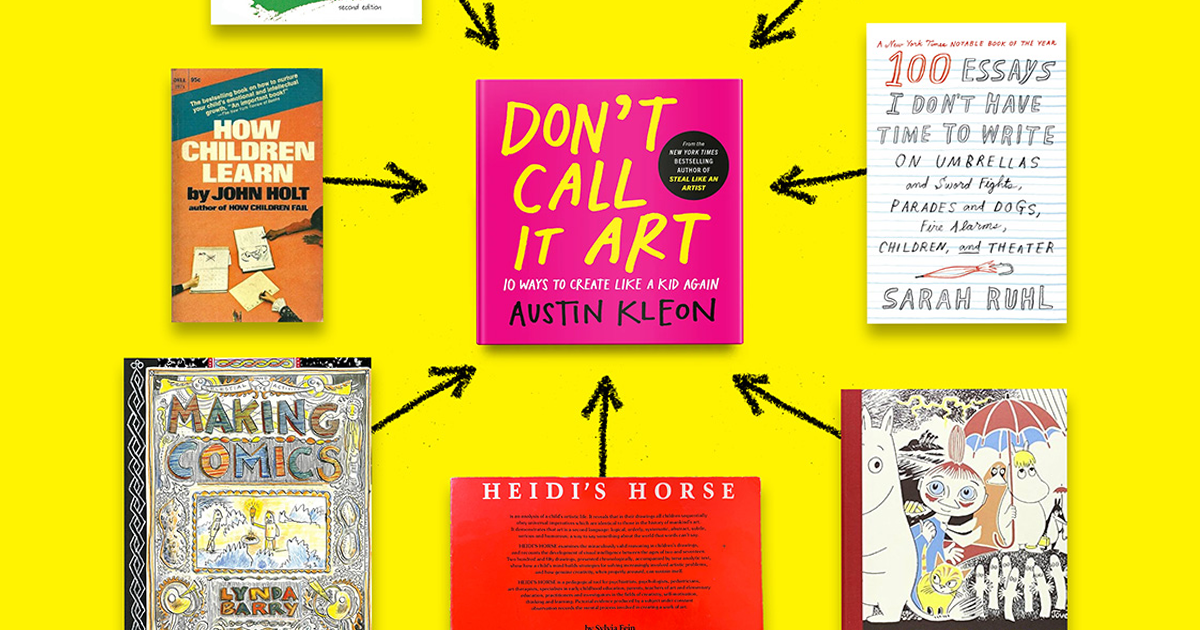
Austin Kleon identifies this book as the direct inspiration for specific pedagogical sections within his own upcoming project.
“Try looking the way the child looks— as if always for the first time— and you will, I promise, feel wider awake.”
Austin Kleon values this work because it provided the core idea that he could turn his own children into his teachers.
“To me it’s a language immersion class. Kids speak image.”
Austin Kleon recommends this book because it inspired him to keep close track of his own children's creative output.
Austin Kleon suggests starting here for anyone interested in exploring the work of Sonny Rollins.
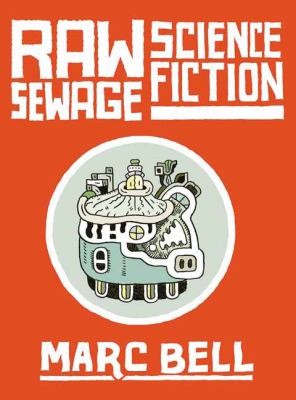
Austin Kleon recommends this work as an unexpected reading delight for those who appreciate episodic stories about friendship and adventure.
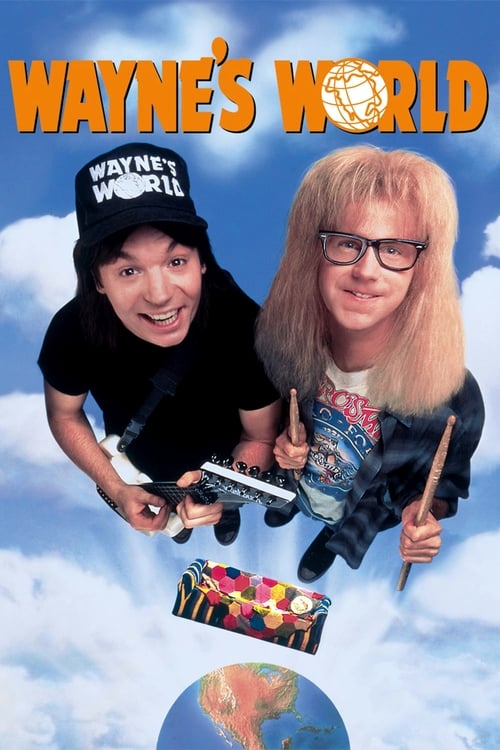
Austin Kleon values this film for its enduring ability to provide comfort, noting that it holds up even years after he first watched it.
“It holds up, big time.”
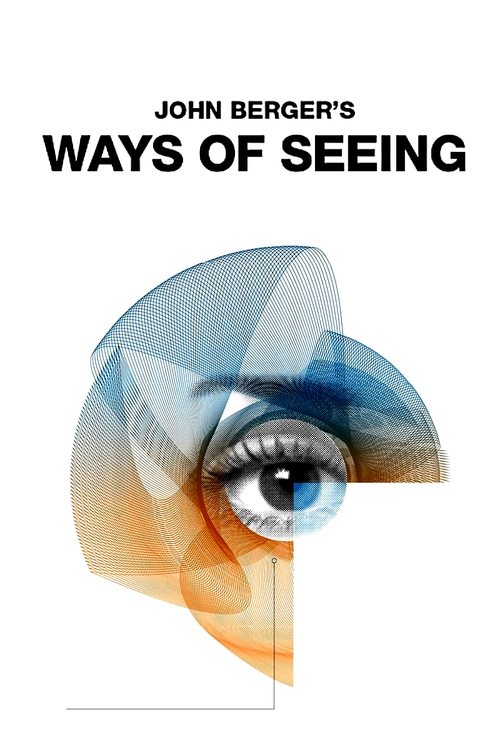
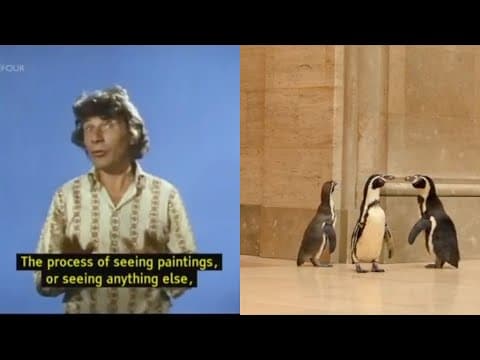
Austin Kleon values this series because it fundamentally challenges the conventional, elitist ways that society teaches people to perceive and mystify art.
“scene after scene shows you this differently”
Austin Kleon appreciates the 'Covercraft' episode for its humorous parallel to his own experiences forming a cover band.
“Homer has a mid-life crisis, takes up bass guitar and forms a cover band with some of the other dads in town”